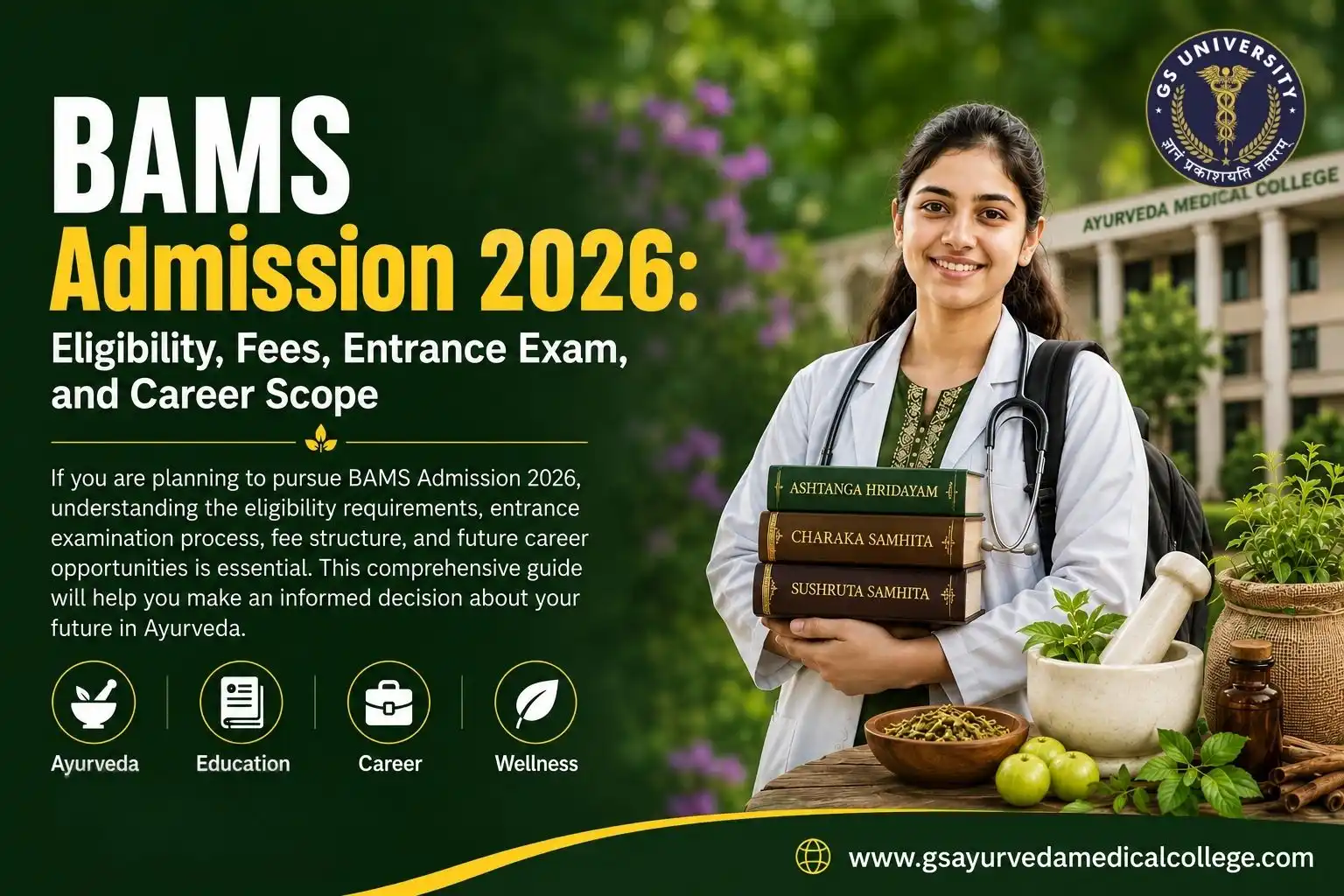
BAMS Admission 2026: Eligibility, Fees, Entrance Exam, and Career Scope
Introduction to BAMS Admission 2026
The healthcare industry in India is evolving rapidly, and alongside modern medicine, traditional systems of healing are gaining tremendous recognition. Among these systems, Ayurveda has emerged as one of the most trusted and widely accepted forms of healthcare. As a result, the Bachelor of Ayurvedic Medicine and Surgery (BAMS) has become one of the most sought-after medical courses among students aspiring to build a successful career in healthcare.
If you are planning to pursue BAMS Admission 2026, understanding the eligibility requirements, entrance examination process, fee structure, and future career opportunities is essential. This comprehensive guide will help you make an informed decision about your future in Ayurveda.
What is BAMS?
BAMS, or Bachelor of Ayurvedic Medicine and Surgery, is a professional undergraduate medical degree focused on the principles and practices of Ayurveda and when it is pursued from Best BAMS College in UP, it yields a high success rate in that individual. The course combines ancient Ayurvedic wisdom with modern medical sciences, enabling students to diagnose, treat, and prevent diseases using holistic approaches.
Understanding the BAMS Course Structure
The curriculum is carefully designed to provide students with theoretical knowledge and practical clinical exposure. Students learn about Ayurvedic principles, herbal medicine, anatomy, physiology, pathology, surgery, and modern diagnostic techniques.
Duration and Internship Requirements
The BAMS program generally spans 5.5 years, including:
- 4.5 years of academic study
- 1 year of compulsory rotating internship
The internship allows students to gain hands-on experience in hospitals, Ayurvedic clinics, and healthcare centers.
Why Choose BAMS in 2026?
The popularity of Ayurveda is growing not only in India but across the world. Increasing awareness about natural healing methods, preventive healthcare, and wellness has significantly boosted demand for qualified Ayurvedic practitioners.
Choosing BAMS in 2026 offers several advantages:
- Growing demand for Ayurvedic doctors
- Expanding wellness industry
- Opportunities in research and academia
- Government support for Ayurveda
- International career prospects
- Entrepreneurial opportunities in healthcare
BAMS Admission 2026 Overview
BAMS Admission 2026 is expected to witness strong competition as more students explore career opportunities beyond conventional medicine. The Bachelor of Ayurvedic Medicine and Surgery (BAMS) program offers a unique blend of traditional Ayurvedic knowledge and modern medical education, Ayurveda College in Uttar Pradesh have designed a perfect curriculum to teach best of Ayurveda to the students. Admission is generally based on performance in the NEET examination and only the students with Phy, Chem, Bio as their subjects in grade 12th can appear for the entrance examination, which is followed by centralized counseling processes. With the increasing popularity of holistic healthcare and government initiatives supporting Ayurveda, BAMS has become an attractive option for students seeking a respected and rewarding healthcare profession.
Eligibility Criteria for BAMS Admission 2026
Following are the eligibility requirements for students seeking admission to the BAMS course.
Academic Qualification Requirements
Candidates should have the following subjects in Class 12:
- Physics
- Chemistry
- Biology
- English
These subjects form the foundation of medical education and are mandatory for BAMS admission.
Minimum Percentage Criteria
The eligibility requirements in terms of percentage of marks are:
- General Category: 50% or above aggregate in Physics, Chemistry, and Biology
- OBC/SC/ST Categories: Relaxation as per government norms
- PwD Candidates: Applicable relaxation according to regulations
Students should regularly check official admission notifications for updated eligibility criteria and reservation policies.
Age Limit for Admission
Applicants must generally be at least 17 years old by December 31, 2026. There is currently no upper age limit for NEET-based BAMS admissions.
Entrance Exam for BAMS Admission 2026
Students must appear for the entrance examination to secure admission to reputed Ayurvedic colleges across India.
Role of NEET in BAMS Admission
NEET is the mandatory entrance examination for admission to the BAMS Course. Without qualifying NEET, students are generally not eligible to take admission into BAMS programs offered by recognized institutions.
The examination evaluates students in:
- Physics
- Chemistry
- Biology
A strong NEET score significantly improves the chances of securing admission to top government and private Ayurvedic colleges.
Expected NEET Cut-Off Trends
The NEET cut-off for BAMS admission varies every year depending upon several important factors. Students should understand that qualifying the examination and securing admission are two different aspects. Admission to top colleges generally requires scores significantly higher than the minimum qualifying marks.
The major factors influencing cut-off trends include:
- Number of applicants appearing for NEET
- Difficulty level of the examination
- Total number of available seats
- Category-wise reservation policies
Students aiming for government Ayurvedic colleges should target scores well above the qualifying cut-off to maximize their chances of admission.
BAMS Admission Process 2026
The admission process for BAMS generally involves multiple stages, beginning with NEET registration and ending with seat allotment and document verification.
Registration and Application
Candidates must complete the following steps:
- Register for the NEET examination
- Appear for the examination
- Qualify with the required score
- Participate in counseling procedures
Accurate submission of personal, academic, and category-related information is extremely important during the application process.
Counselling Process
After NEET results are declared, counseling is conducted through various admission authorities across the country.
- All India Quota (AIQ) Counseling
- State Quota Counseling
- Deemed University Counseling
During counseling, students can select their preferred colleges based on rank, category, seat availability, and admission eligibility criteria.
Document Verification
Proper verification of documents is mandatory before final seat allotment. Students are generally required to submit:
- NEET Scorecard
- Class 10 Certificate
- Class 12 Marksheet
- Identity Proof
- Category Certificate (if applicable)
- Passport-sized Photographs
Candidates should keep both original documents and photocopies ready during the admission process.
BAMS Course Fees in 2026
BAMS Fee Structure varies considerably depending on the type of institution.
Government College Fee Structure
Government Ayurvedic colleges are generally more affordable for students. Annual tuition fees may range between ₹20,000 and ₹1,00,000 depending upon state regulations and institutional policies.
Students often prefer government colleges because of their affordable fee structure, experienced faculty, and strong academic reputation.
Private College Fee Structure
Private Ayurvedic colleges generally charge higher tuition fees compared to government institutions. Annual fees may range from approximately ₹1.5 lakh to ₹5 lakh depending upon the college ranking, infrastructure, facilities, and clinical exposure provided.
Before selecting a college, students should carefully evaluate both the academic quality and overall return on investment.
Additional Expenses During Study
Apart from tuition fees, students should also consider additional expenses that may arise during the course duration.
- Hostel Accommodation
- Books and Study Materials
- Clinical Instruments
- Examination Fees
- Transportation
- Personal Expenses
Understanding the complete financial commitment helps students and parents plan educational expenses more effectively.
Subjects Covered in BAMS
The BAMS curriculum offers a balanced combination of traditional Ayurvedic knowledge and modern medical sciences, helping students develop a strong foundation in healthcare.
Pre-Clinical Subjects
During the initial years, students study:
- Sanskrit
- Padartha Vigyan
- Anatomy
- Physiology
- Ayurvedic Philosophy
These subjects establish the fundamental concepts of Ayurveda and medical science.
Clinical Subjects
In advanced years, students gain deeper knowledge through clinical and practical subjects such as:
- Kayachikitsa
- Panchakarma
- Surgery
- Obstetrics and Gynecology
- Pediatrics
- Toxicology
- Pharmacology
Clinical training enables students to apply theoretical knowledge in real healthcare settings and develop professional competence.
Skills Required to Succeed in BAMS
Pursuing a BAMS degree requires more than academic excellence; it demands a genuine interest in understanding people and promoting holistic well-being. Students should possess strong observation and analytical skills to identify the underlying causes of health issues rather than focusing solely on symptoms.
Effective communication is equally important, as Ayurvedic practitioners spend significant time educating patients about lifestyle modifications, dietary habits, and preventive healthcare. Compassion, patience, and empathy help build trust and improve patient outcomes.
Additionally, a willingness to continuously learn and adapt is essential because healthcare is constantly evolving. These qualities help BAMS students become competent and respected healthcare professionals.
Career Scope After BAMS
BAMS offer a lucrative Ayurvedic Doctor Career as well as the wide range of other career opportunities available after graduation.
Clinical Practice Opportunities
After completing BAMS, graduates can establish successful healthcare practices through:
- Private Clinics
- Ayurvedic Hospitals
- Wellness Centers
- Panchakarma Centers
Many practitioners develop successful independent healthcare practices and build a strong patient base over time.
Government Sector Jobs
Government employment opportunities are available in various healthcare departments and institutions.
- Government Ayurvedic Hospitals
- Public Health Departments
- Research Institutions
- AYUSH Departments
Government jobs often provide stability, attractive benefits, and opportunities for long-term career growth.
Research and Academics
Students interested in scientific advancement and education can pursue careers in:
- Clinical Research
- Drug Development
- Academic Teaching
- Medical Writing
These fields contribute significantly to the growth and modernization of Ayurveda.
Healthcare Management Careers
BAMS graduates can also work in administrative and managerial healthcare roles.
- Hospital Administration
- Healthcare Consulting
- Wellness Management
- Medical Tourism
These professions combine healthcare expertise with leadership and business management responsibilities.
Higher Education Options After BAMS
Learning and professional development do not stop after graduation. BAMS graduates have numerous opportunities for higher studies and specialization.
MD/MS Ayurveda
Popular postgraduate specializations include:
- Kayachikitsa
- Panchakarma
- Shalya Tantra
- Dravyaguna
- Roga Nidana
These postgraduate programs help Ayurvedic doctors become specialists in their chosen fields of Ayurveda.
Public Health and Research Programs
Graduates may also pursue:
- Master of Public Health (MPH)
- Clinical Research Programs
- Hospital Management Courses
- Healthcare Administration Degrees
These qualifications significantly broaden career opportunities in healthcare.
Salary Prospects After BAMS
Salary packages vary depending upon experience, specialization, location, and the organization where an individual is employed.
- Fresh Graduates: ₹3–6 Lakh Per Annum
- Experienced Practitioners: ₹6–12 Lakh Per Annum
- Specialists and Consultants: ₹12 Lakh+ Annually
Entrepreneurs operating successful clinics or wellness centers may earn substantially higher incomes over time.